Marketing Agency Content Management: UAE and India Guide
By Digyverse
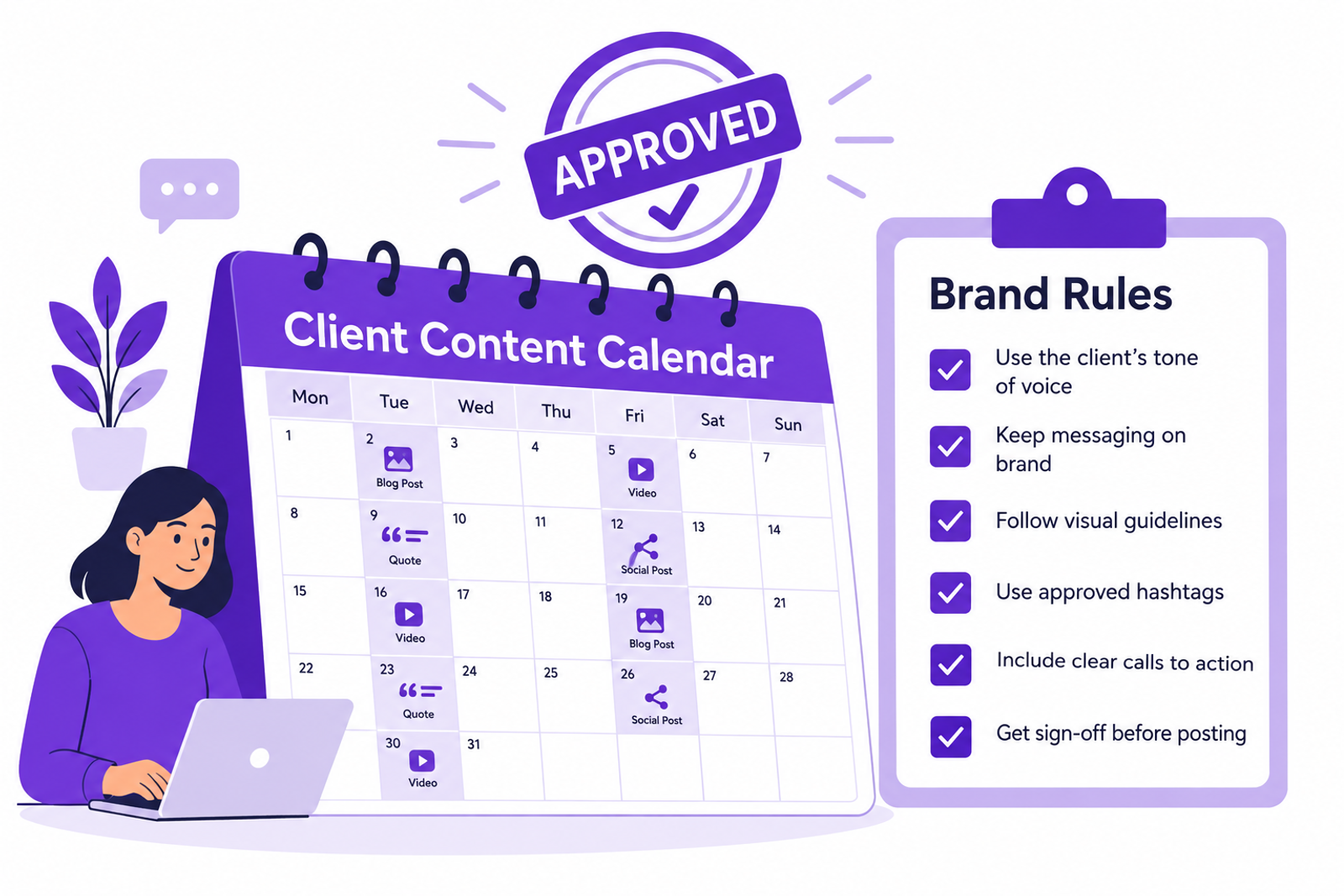
Marketing agency content management works when each client has a calendar, brand rules and an approval step of their own. Digyverse, an AI marketing platform from Ahmedabad, is built around that: one Knowledge Vault per client and a drafted month in Content Calendar Plus.
This guide to marketing agency content management is for owners and managers of small and mid-size agencies in the UAE and India. It covers the setup, the monthly rhythm and the mistakes that cost the most time. It also shows where tools such as Canva and ChatGPT fit.
Why marketing agency content management breaks down
Briefs sit in chats. Approvals arrive on WhatsApp at night. Captions get written by whoever is free that day. The monthly report is built by hand on the last evening.
With a small team, one sick day moves every client's schedule. A festival that nobody planned for becomes a rush job. A post goes live that the client never saw. None of this comes from a lack of effort. It comes from a setup where each client keeps their details in a different place.
The fix is boring on purpose. Give every client the same few things, in the same place, every month.
Step 1: List what each client needs before you plan anything
Start with a one-page profile per client. Keep it short and keep it current.
- What the business sells, and to whom.
- The tone of voice, with two or three example sentences.
- Words and claims to avoid, such as medical or financial promises.
- Languages for captions.
- Who approves content, and how fast they usually reply.
- The three or four numbers the client cares about most.
This page is the base for every calendar, caption and report that follows. If it is vague, everything built on it is vague.
Step 2: Give every client a calendar of their own
One shared calendar mixes festivals, offers and tone. Keep a separate month per client, built around that client's own moments.
For UAE clients, the fixed point is UAE National Day on 2 December. Ramadan and Eid follow the moon, so the dates move each year. For 2027, Ramadan is expected to begin on 8 February, depending on the moon sighting. Plan around the expected date, then confirm it a few days before.
For India clients, Diwali in 2026 falls on 8 November, with the five-day run starting before it. Navratri and regional festivals vary by state and city, so a Gujarat client and a Delhi client rarely share a calendar.
Content Calendar Plus plans a full month of posts, stories and carousels around a client's festivals and offers. You review the month, edit what you like and approve it. That turns a planning week into a review afternoon.
Step 3: Keep each client's brand voice in one place
Write the rules down once per client. Tone, services, approved wording, words to avoid, and the documents the client has shared. Then make every writer and every tool follow that page.
In Digyverse, the Knowledge Vault holds this for each client, and each client's data stays separate. Posts, captions and campaigns for that client follow what is saved there. Quality then does not depend on who is on shift.
Whatever tool you use, the rule is the same. One place per client. Not one deck buried in someone's downloads.
Step 4: Set one approval step before anything goes out
Draft the month. Review it. Edit it. Then approve it.
Agree with each client how they sign off, for example a message or a shared sheet, and approve only after that. Once approved, content can be downloaded, scheduled or published to Instagram and Facebook pages. A documented step stops the most common failure: a post going live that the client never saw.
For routine work, an agent can help. The Agentic workflow module takes a task such as this week's posts and waits for your approval before anything moves.
Step 5: Plan languages early
Many UAE and India clients need more than one language. Digyverse writes captions in English, Hindi and Gujarati. It does not write Arabic captions. For UAE clients who need Arabic, plan for a native speaker to write or check them, and note the language rule on the client's profile page.
Decide languages at the start of the month. Changing them halfway means rewriting captions, and often rebooking the reviewer.
Step 6: Report once a month from the client's own data
Choose three or four numbers per client at the start of the month, such as sales, orders, enquiries and followers. At the end, upload the client's sheet to a KPI Dashboard and share clear cards and charts instead of building a report by hand.
Clients read short reports. Two clear charts and three sentences about what changed beat a 20-page deck.
A weekly rhythm that a small team can keep
- Monday: check the week's posts and any festival or offer that changed.
- Midweek: chase pending approvals. One reminder is polite. Three is a process problem.
- Friday: look at what worked, note it on the client's page, and queue next week's ideas.
- Last week of the month: draft next month for every client and send it for sign-off.
Where Canva, ChatGPT and spreadsheets fit
They all have a place. Canva is strong for design. ChatGPT is useful for one-off writing and ideas. A spreadsheet is fine for tracking. What they do not hold is each client's brand memory and a planned month in one place, so someone pastes the same context into them again and again.
If you only have two or three clients, that free stack may be enough. Past that, the copying starts to cost more than the tools save. See our comparison with Canva and ChatGPT for when each option fits.
Mistakes that cost agencies the most time
- Planning the whole month on a festival date that has not been confirmed.
- Reusing one client's captions for another because the briefs look alike.
- Writing in a language the client's team cannot read or approve.
- Letting approvals run through five chats instead of one.
- Sending reports with every metric instead of the few the client asked for.
Illustrative example
Illustrative example, not a real client. A five-person agency looks after three UAE clients and seven Indian ones. In the last week of the month it opens each client's profile, drafts that client's month, and reviews the ten calendars over two days. Each client signs off. The team then spends the rest of the month on work that needs people: shoots, replies and campaign ideas.
A short checklist for marketing agency content management
- One profile and one brand page per client.
- One calendar per client, built around their festivals and offers.
- One approval step, agreed with each client.
- Languages decided before the month starts.
- Three or four report numbers chosen in advance.
- Festival dates checked a few days before they matter.
Digyverse is sold through a 20-minute demo. If marketing agency content management is eating your week in the UAE or India, you can book a demo or read how it works for marketing agencies.
Frequently Asked Questions
What are the best tools for managing content for multiple clients in a marketing agency?
The best tools combine content planning, approval workflows, and performance tracking in one platform. Canva is popular for design, ChatGPT for copywriting, and spreadsheets help organize tasks. Platforms like Digyverse offer modules such as Content Calendar Plus and Knowledge Vault to manage multiple clients with brand consistency and approvals.
How can marketing agencies maintain consistent brand voice across different clients?
Agencies maintain brand voice by centralizing brand guidelines and approved messaging in one place. Storing tone rules, vocabulary, and language-specific captions ensures all content aligns with each client’s identity. Tools like Knowledge Vault can help organize these assets for easy access and use.
What is the typical content approval process in agencies handling multiple clients?
A typical process involves drafting content based on briefs and brand rules, sharing drafts with clients for review, collecting feedback, and securing approval before scheduling posts. Clear documentation and reminders help keep approvals on track, ensuring client satisfaction and error-free publication.
How do marketing agencies in UAE and India handle content planning differently?
UAE agencies plan content around Islamic festivals like Ramadan, Eid, plus national events like UAE National Day and Dubai Shopping Festival. Indian agencies focus on diverse festivals such as Diwali and Navratri, often tailoring content by region and language. Both adapt calendars to local cultural moments to boost engagement.
What challenges do marketing agencies face when managing social media for many clients?
Common challenges include juggling varied client briefs, managing multi-language content, ensuring timely approvals, tracking performance, and avoiding content overlap. Small teams especially struggle with manual workflows and scattered tools, which can lead to errors and delayed posts.