The Death of the Traditional Marketing Agency: Why Startups are Pivoting to Autonomous AI Engines
By Jaydev Panchal
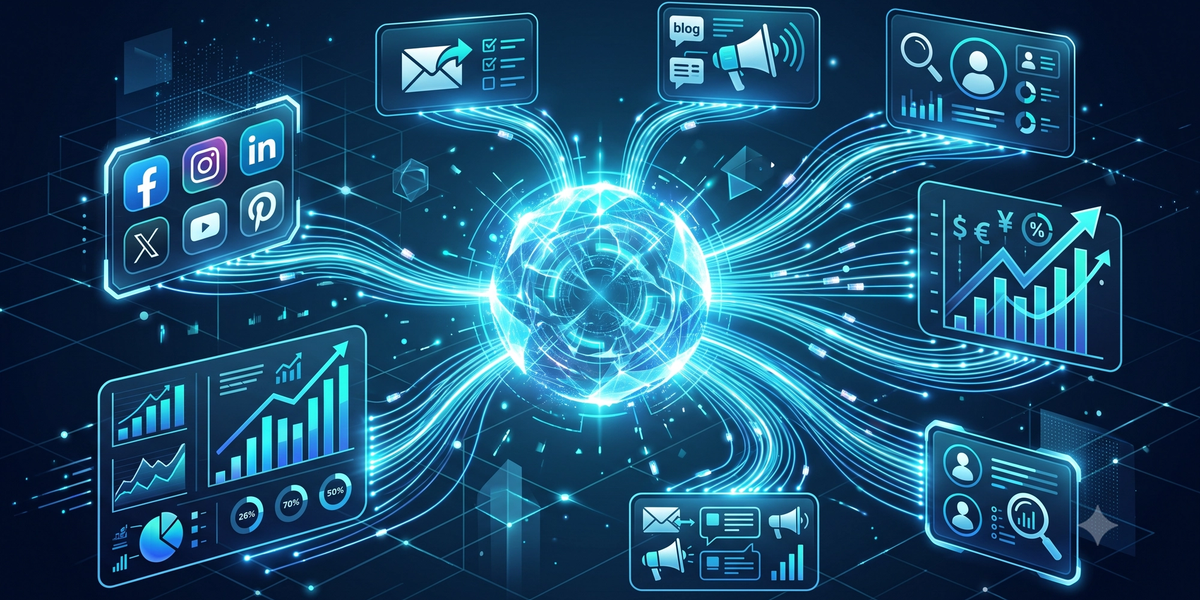
For the last decade, a funded startup’s growth playbook looked exactly the same. You raise capital, hire a traditional marketing agency on a massive $10,000 per month retainer, wait three weeks for a "strategy deck," and hope the creative actually converts.
In 2026, that model is officially dead.
Today, the most dangerous bottleneck for high growth startups, D2C brands, and FMCG companies isn't a lack of capital. It is the speed of execution. The traditional agency model, built on billable human hours, periodic reporting, and siloed data, simply cannot keep up with the real time demands of modern paid acquisition.
Welcome to the era of Agentic Marketing and the rise of Autonomous AI Growth Engines.
The Operating Model Has Changed
Let's clear up a massive misconception. Almost every agency today slaps "AI Powered" on their pitch deck. But if they are just using ChatGPT to write blog outlines or Midjourney to brainstorm ad creative, they haven't changed their operating model. They just bought new tools for the same slow processes.
A true autonomous growth engine changes the work itself. It shifts marketing from rigid, rule based automation ("If X happens, then send Y email") to goal driven, adaptive reasoning.
When you strip away the buzzwords, startups are firing traditional agencies because of three fatal flaws:
1. The Speed of Iteration (Months versus Minutes)
A traditional agency runs a campaign, waits for a two week reporting cycle, and then brings the team together to analyze what went wrong.
An Autonomous AI Engine monitors live signals continuously. If a specific ad creative is burning cash on Meta at 10:00 AM, an AI media buyer doesn't wait for a Friday status call. It dynamically reallocates that budget to the winning ad set by 10:02 AM. In paid media, speed is no longer just a small advantage; it is a critical competitive edge.
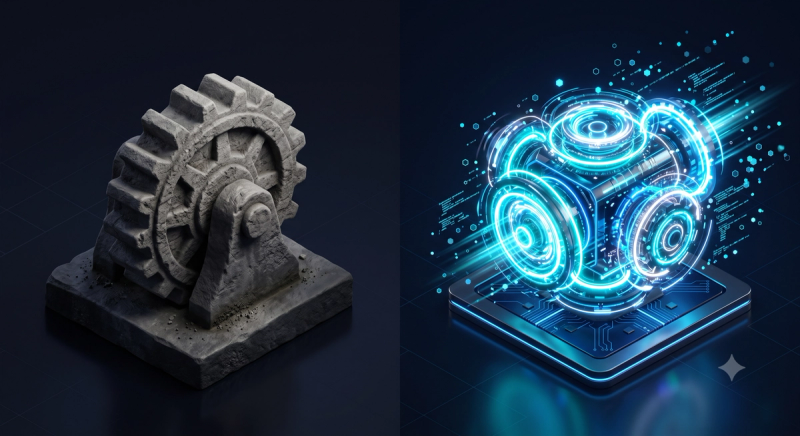
2. The Cost of "Creative Bottlenecks"
Traditional agencies charge you based on human labor. If you need 50 ad variations to test across Instagram, LinkedIn, and Google, you are paying for the copywriter, the graphic designer, and the account manager to coordinate it.
Startups need volume and iteration. AI engines generate highly targeted, multi frame visual carousels and personalized messaging at scale. The bottleneck moves from asking how much budget we have to design these assets, to asking how fast the system can deploy them.
3. Misaligned Incentives and Data Silos
Most agencies operate in a vacuum. They don't see your daily operational KPIs, your inventory levels, or your yield margins. They just spend the ad budget they were given.
This is where multi tenant architectures, like the one we built at Digyverse BI, change the game completely.
Enter the Autonomous Business Engine
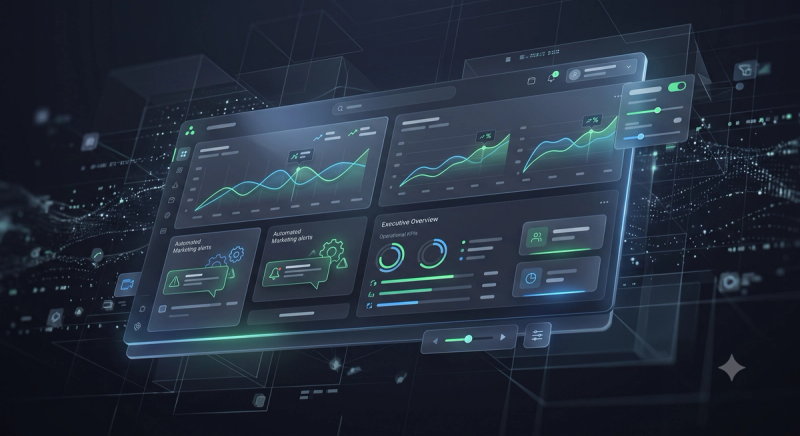
At Digyverse, we didn't just build another dashboard. We built an AI native ecosystem that bridges your raw operational data directly to your marketing execution.
We call it the Insight Clipboard. Instead of relying on an agency account manager to guess what campaigns to run, our system ingests your daily operational records in real time.
For an FMCG brand: The system notices a drop in regional distribution velocity and instantly triggers targeted localized ads.
For a Startup: The DigyMark AI module stalks competitor keywords (our Radar module) and automatically renders complex visual creatives and social captions to capture market share.
The system is given a business objective, and it autonomously plans the strategy, generates the creative, executes the media buying, and learns from the results.
Agentic Marketing is the New Standard
Gartner predicts that by 2028, 60% of brands will rely on agentic AI for customer interactions. Startups cannot afford to wait two years to adopt this.
When you replace a bloated traditional agency with an autonomous engine, you aren't just saving on monthly retainers. You are deploying an AI teammate that adapts, optimizes, and engages in real time, operating across multiple channels simultaneously.
Where Traditional Agencies Still Win (And Where They Don't)
To be fair, traditional agencies still have a place. If you need to invent a net new category, shoot a Super Bowl commercial, or execute a complete brand identity overhaul, you need human craft and emotional resonance.
But if your goal is scaling paid acquisition, driving high quality leads, and optimizing your Customer Acquisition Cost ruthlessly? You need a volume and iteration model. Industry data shows that AI driven campaigns lower acquisition costs by up to 29% compared to manual execution. You need an engine.
Stop Paying for Hours. Start Investing in Systems.
The startups that win in 2026 will not be the ones with the biggest agency retainers. They will be the ones running lean, hyper efficient AI infrastructures that turn raw data into predictable revenue.
If you are a founder or CMO tired of waiting weeks for campaign launches and paying premium fees for manual media buying, it is time to upgrade your operating system.
Ready to see what an Autonomous Business Engine can do for your pipeline?
Frequently Asked Questions
What exactly is Agentic Marketing?
Agentic marketing goes beyond basic scheduling or rule based automation. Instead of just following predetermined triggers, an autonomous AI engine understands your overall business goals, analyzes live operational data, and executes campaigns dynamically across multiple channels without requiring human intervention.
Will AI completely replace human marketing teams?
Not entirely. Human creativity is still essential for high level brand strategy, emotional storytelling, and category creation. However, autonomous engines are rapidly replacing the manual, repetitive tasks of media buying, daily optimization, and multi frame creative generation.
How does Digyverse BI differ from hiring an agency?
Traditional agencies rely on siloed data, delayed reporting cycles, and billable human hours. Digyverse BI bridges the gap by connecting your raw operational KPIs directly to your marketing execution. The system deploys highly targeted campaigns the exact moment a capacity gap or growth opportunity arises.